
2026-2027 SPARCnet RaMP Research Questions & Selecting a Mentor
Participants in SPARCnet RaMP will receive one year of full-time, paid, mentored research training at one of our participating institutions. Participants will complete two research projects: a network-wide cohort project which involves all participants and an individual tailored project co-developed with their mentor. These projects are organized around three cohort project themes and five tailored project themes. Below, we list the broad research questions under each project type, and our mentor profiles describe the specific interests and expertise of each mentor for the 2026-2027 cohort. Our mentors have a diverse set of field and laboratory experience, skills, and tools available to allow participants to design research projects which suit their interests. The map shows you where each mentor is located within the range of our focal study species, the eastern red-backed salamander (Plethodon cinereus). When you apply to 2026-2027 SPARCnet RaMP you will be asked to rank your preferred mentor(s) & location(s).
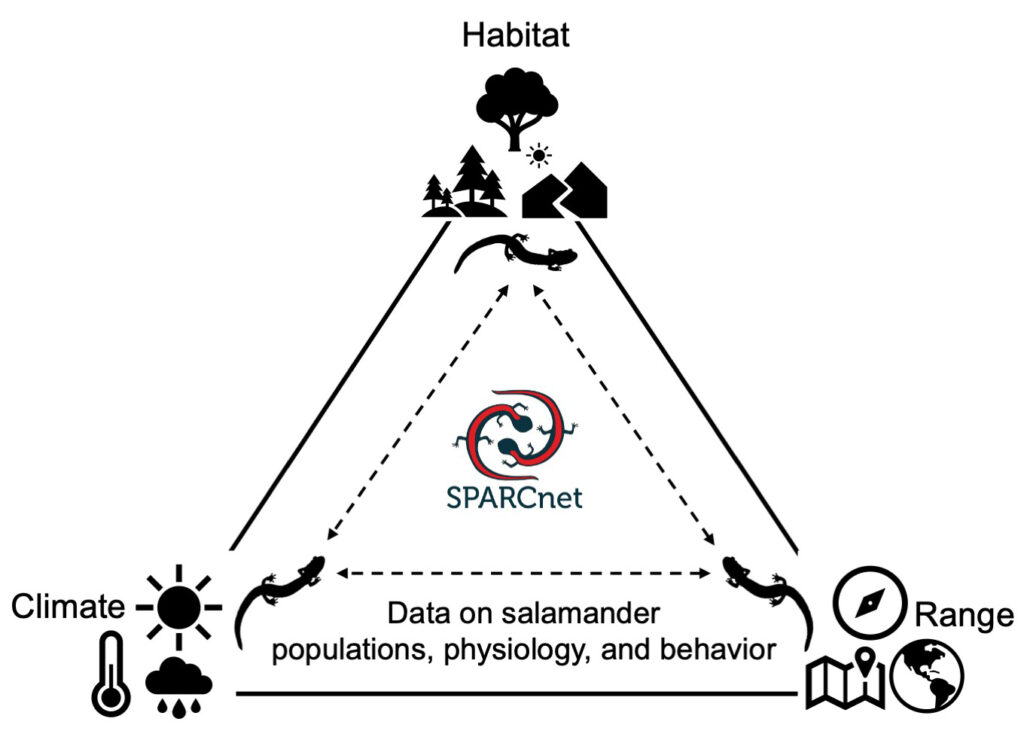
Cohort Project Research Questions:
- Population Ecology: How do salamander population structure and dynamics differ across different climatic conditions within the species’ range?
- Physiological Ecology: What is the relationship between environmental conditions and the growth and condition of individual salamanders?
- Behavioral Ecology: How do climatic conditions affect behavior of surface activity by salamanders and do these relationships vary among locations?
Tailored Project Themes & Example Research Questions:
- Behavior, e.g., how does salamander foraging behavior and surface activity vary with changes in climatic variables?
- Physiology, Morphology, and Genetics, e.g., does salamander physiology vary with environmental correlates among populations?
- Habitat, e.g., how do abiotic components, like temperature, moisture, or pH, of study plots correlate with local salamander densities?
- Prediction and Modeling, e.g., how are future climates predicted to affect future distributions of salamanders?
- Human Dimensions, e.g., how can we support effective science communication and engagement of SPARCnet research with land managers?

SPARCnet RaMP Mentors for the 2026-2027 Cohort
Click on mentor names to access their professional websites and learn more about their research.
Elizabeth (Beth) Bastiaans, Ph.D.
SUNY Oneonta
Oneonta, New York
The Bastiaans lab at SUNY Oneonta primarily focuses on behavioral ecology, especially questions relevant to conservation. We have six SPARCnet plots and a highly abundant population of red-backed salamanders, many of which are marked. Past projects in our lab have used the SPARCnet infrastructure and have also involved capturing salamanders from the forest surrounding our plots or from other nearby natural areas. Students have investigated what factors affect whether a salamander moves from one cover board to another, how salamanders acclimate over time to changing fall and spring temperatures, how salamanders' ability to tolerate desiccation changes with temperature and precipitation, and how how individual salamanders' biofluorescent coloration changes over time. RaMP fellows in the lab would be welcome to design projects taking advantage of our ability to track individual salamanders over time and asking questions related to behavior, growth, physiology, or genetics. We anticipate mentee questions will be in line with the RaMP research theme: “investigate patterns in salamander response to variable environmental conditions, examine mechanisms and processes that underlie these patterns.”

Stephanie Coster, Ph.D.
Randolph-Macon College
Ashland, Virginia
The Richmond area RaMP mentees (2 positions) will both work in the Grayson Lab at the University of Richmond and the Coster lab at Randolph-Macon College (located 30 minutes apart). The Grayson lab at UR studies thermal biology, habitat use, and movement. Past research has explored geographic variation in critical thermal minimum and the high density of salamanders in our suburban plots. The Coster lab at RMC uses genetic techniques to aid in the conservation and management of wildlife populations. Past research has explored how the density of red backed salamanders impacts relatedness (i.e., “Are neighbors family or foe?”). Both RaMP mentees would have the opportunity to learn techniques in experimental field ecology, as well as quantifying genetic diversity and fine-scale genetic structure across the geographic range of red backed salamanders. Mentees will design their tailored research projects to align with the expertise of either mentor.
David McLeod, Ph.D.
Mary Baldwin University
Staunton, Virginia
The McLeod lab at Mary Baldwin University is interested in questions related to the morphology, systematics, ecology, evolution, and conservation of amphibians. As a lab group, we seek opportunities to use our activities and interests to engage the public in science through outreach and education. Located within Appalachia, the world’s biodiversity hotspot for salamanders, we have turned our attention to the diversity present in our own ‘backyard’. Recent research has focused on amphibian biofluorescence, disease ecology, competition between native and introduced salamanders, and the effects of human disturbance on salamander ecology. RaMP participants will have the opportunity to participate in our primary project which seeks to understand how differences in the physical environment affect salamander populations. Mentees will also be able to develop independent questions related to topics such as the salamander biofluorescence, impacts of agriculture, invasive species, or forest management practices (i.e., prescribed burns) on populations of Plethodon cinereus. Mary Baldwin University is a private liberal arts institution and is home to a small, diverse, and welcoming community of learners.

Brandon Hedrick, Ph.D.
Cornell University
Ithaca, New York
The Hedrick Lab works to explore evolutionary ecology and how different species have been capable of colonizing novel niches through a variety of field-based and computer-based techniques. RaMP participants will have the opportunity to participate in data collection for an ongoing red-back salamander project looking at how elevational changes in microclimate in the Ithaca area impacts space-use and demography. Previous RaMP mentees developed their own projects on salamander longevity and demographic changes over decade long time scales and on micro-habitat movements and homing capacity through translocation experiments. Participants will also be able to contribute to different projects in the lab examining how either intra- or interspecific morphological or physiological differences in plethodontid salamanders may allow them to live differently in different environments. For example, we will be bringing different species of local salamanders that have different dispersion capacities into the lab to evaluate their locomotor capabilities by running them on treadmills at different temperatures using high-speed video. There will be additional opportunities to learn how to do respirometry through the University of Scranton and co-mentor Vinny Farallo.
Evan H. Campbell Grant, Ph.D.
United States Geological Survey
UMass Amherst
Turners Falls, Massachusetts
The Northeast Amphibian Research and Montioring Initiative (NEARMI) research program at the U.S.G.S. Conte Anadromous Fish Research Laboratory in Turners Falls, Massachusetts uses field data and quantitative models to understand population dynamics and support Federal and State partners (e.g., U.S. Fish and Wildlife Service, National Park Service) in their conservation decision-making. NEARMI offers three SPARCnet RaMP opportunities: (1) RaMP participants will investigate the potential to combine datasets from Core Project capture-mark-recapture sites with less intensive, but more spatially extensive, count data. (2) RaMP participants will have the opportunity to test relative sensitivity to different manifestations of seasonal drought, through both an experimental and data analysis approach. (3) RaMP participants will have the opportunity to understand how individual breeding status affects surface activity, using datasets from the Core Project capture-mark-recapture sites.
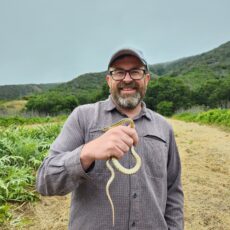
David A.W. Miller, Ph.D.
Pennsylvania State University
State College, Pennsylvania
The Applied Population Ecology Lab at Penn State University seeks to understand how climate and land-use change affect wildlife populations and communities. Two mentees will join an active and dynamic lab that includes undergraduate students, graduate research assistants, post-docs, and field and lab technicians working to address real-world conservation needs. Our research focuses on innovative field and statistical approaches to quantify how wildlife populations respond to stressors. Mentees will have the opportunity to work on one of two potential research areas. The first would focus on combining data about thermal preferences of terrestrial salamanders with species richness estimates to determine how seasonality and climate are related to salamander diversity in eastern North America . The second potential topic would be to look at the effects of density dependence as part of our local SPARCnet density manipulation project that will begin in spring 2026.

Kristine Grayson, Ph.D.
University of Richmond
Richmond, Virginia
The Richmond area RaMP mentees (2 positions) will both work in the Grayson Lab at the University of Richmond and the Coster lab at Randolph-Macon College (located 30 minutes apart). The Grayson lab at UR studies thermal biology, habitat use, and movement. Past research has explored geographic variation in critical thermal minimum and the high density of salamanders in our suburban plots. The Coster lab at RMC uses genetic techniques to aid in the conservation and management of wildlife populations. Past research has explored how the density of red backed salamanders impacts relatedness (i.e., “Are neighbors family or foe?”). Both RaMP mentees would have the opportunity to learn techniques in experimental field ecology, as well as quantifying genetic diversity and fine-scale genetic structure across the geographic range of red backed salamanders. Mentees will design their tailored research projects to align with the expertise of either mentor.

Angela Burrow, Ph.D.
Michigan State University
East Lansing, Michigan
The Burrow lab at MSU primarily focuses on understanding how environmental stressors (e.g., pollution, heat waves, invasive species) shape ecological systems from individuals to communities. We collaborate with other MSU researchers who have established SPARCnet plots across habitat gradients. Past projects on forest salamanders include a long term study on the interacting effects of deer browse pressure and invasive organisms utilizing th redback salamander as an indicator species, investigating drivers of competition between salamander species, and comparing alternative coverboard designs for capturing salamanders. RaMP fellows in the lab would be encouraged to develop projects exploring the role of environmental stressors on individual fitness and performance. Fellows would be welcome to design projects asking questions related to behavior, growth, or physiology that inform our understanding of how stressors in the environment impact individuals in ways that ultimately affect populations.
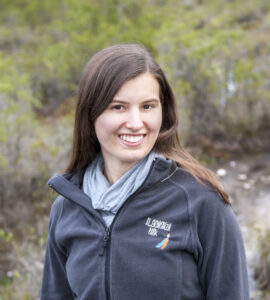
Alexa Warwick, Ph.D.
Michigan State University
East Lansing, Michigan
The Warwick lab addresses ecological, social science, and education/outreach research questions in the context of wildlife conservation. Past projects investigated: professional herpetologists' perceptions and involvement in public engagement; public perceptions and knowledge of local salamander species; ecological differences and their impact on salamander densities among SPARCnet plots; frequency and type of avian predation of salamanders; impact of human behaviors on the spread of amphibian disease through the exotic pet trade; abundance and diversity of reptile and amphibian communities in a degraded and restored wetlands; and a literature review of human dimensions research on reptiles and amphibians. RaMP participants will have access to 8 years of spatial mark-recapture data of red-backed salamanders from six research plots on the Rose Lake State Wildlife Area near campus. Two additional salamander plots are monitored at the adjacent MSU Corey Marsh Ecological Research Center. Tailored projects could investigate a wide range of ecological topics and leverage resources of other MSU lab groups as needed. Participants could also investigate the human dimensions of salamander conservation, either expanding on disease in the pet trade efforts, addressing how humans value the role of salamanders in ecosystems and/or how SPARCnet can better support engagement with land managers. Dr. Warwick works jointly with MSU Extension and Michigan Department of Natural Resources to develop engagement programs for stakeholder audiences and the general public, which can provide additional professional development and networking opportunities for RaMP participants.
SPARCnet RaMP Co-Mentors for the 2026-2027 Cohort
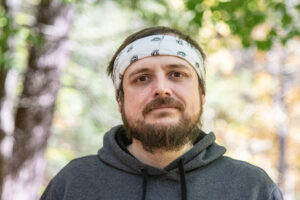
Co-Mentor Vincent (Vinny) Farallo, Ph.D.
University of Scranton
Scranton, Pennsylvania
Working with Brandon Hedrick
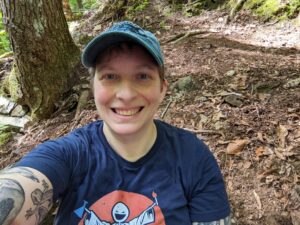
Co-Mentor Caitlin Fisher-Reid, Ph.D.
Bridgewater State University
Bridgewater, Massachusetts
Working with Kristine Grayson and Stephanie Coster
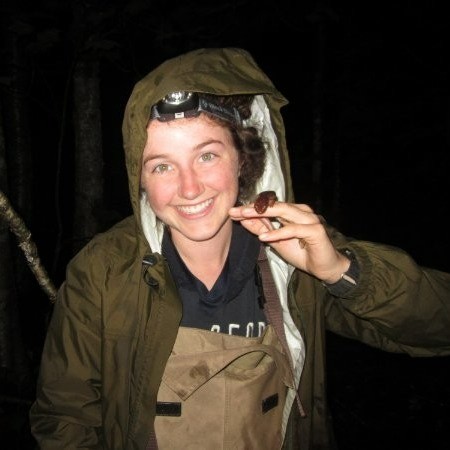
Co-Mentor Elise Edwards, Ph.D.
United States Geological Survey
Turners Falls, Massachusetts
Working with Evan Grant
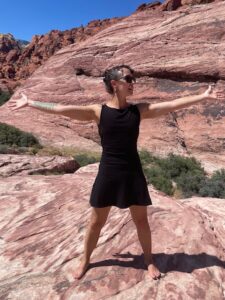
Co-Mentor Kadrin Anderson, M.S.
Mary Baldwin University
Staunton, Virginia
Working with David McLeod
SPARCnet RaMP Coordinators
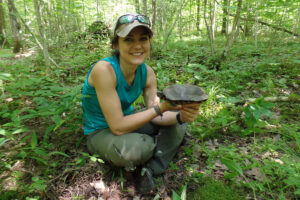
SPARCnet RaMP Research Coordinator
Carli Dinsmore, M.S.
Pennsylvania State University
State College, Pennsylvania
 SPARCnet RaMP Program Coordinator
Bethany Ozolins, M.S.
Bridgewater State University
Bridgewater, Massachusetts